Hard Water Spots on Windows: What They Are and How to Remove Them
Those cloudy spots aren't dirt — they're calcium and magnesium bonded to the glass. Regular window cleaner won't touch them.
Southern California has some of the hardest tap water in the country. When sprinklers hit your windows every morning, the water evaporates and leaves behind calcium, magnesium, and silica deposits that bond to the glass. Ignore them long enough and they etch permanently into the surface.
How to know if you have hard water damage
- Cloudy or milky appearance that won't wipe off
- White spots or streaks concentrated on lower windows
- Rainbow sheen when the sun hits the glass at an angle
- Rough texture when you run a fingernail across the glass
Why regular window cleaning doesn't fix it
Standard window cleaner is designed to lift dust, pollen, and oils — not to dissolve mineral deposits. In fact, aggressive wiping with a cloth can drag the mineral crystals across the glass and scratch it. This is a chemistry problem, not a scrubbing problem.
The professional removal process
- Test a small area to confirm the deposits will release without damaging the glass
- Apply a mineral-deposit dissolving compound (usually a mild oxalic or fluoride-based solution)
- Let it dwell long enough to break the calcium bond
- Agitate with a non-scratch pad
- Neutralize and rinse
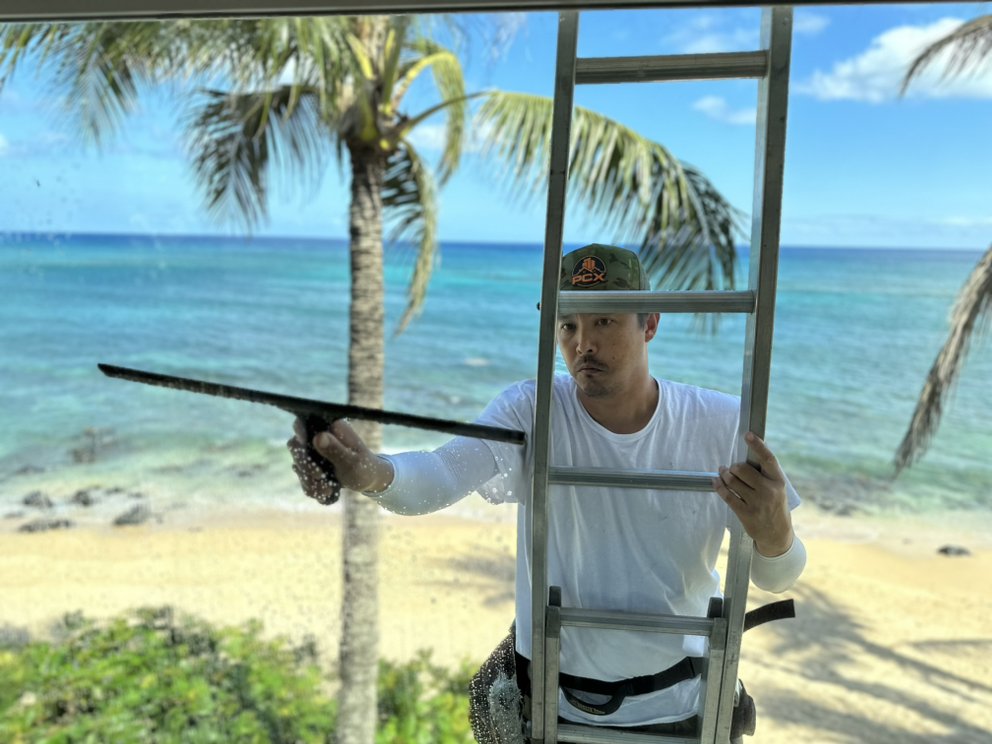
- Squeegee clean and inspect at multiple angles
How to prevent it from coming back
- Redirect sprinkler heads away from windows (the #1 fix)
- Install a sprinkler timer that runs before dawn so water evaporates faster
- Apply a hydrophobic glass coating after cleaning — water beads off before it can dry
- Schedule pro window cleaning twice a year to catch deposits early
Frequently asked questions
Can severely etched glass be restored?
Sometimes. Light etching lifts with a proper hard-water treatment. Deep etching that you can feel with a fingernail usually can't be fully removed and may need glass replacement.
Are DIY hard-water removers safe?
Most contain hydrofluoric acid or aggressive abrasives that can damage the glass, window seals, and surrounding paint if used incorrectly. Test in a hidden corner first, or hire a pro.